"It's our thesis that privacy will be an integral part of the next wave in the technology revolution and that innovators who are emphasizing privacy as an integral part of the product life cycle are on the right track." --The authors of The Privacy Engineer's Manifesto
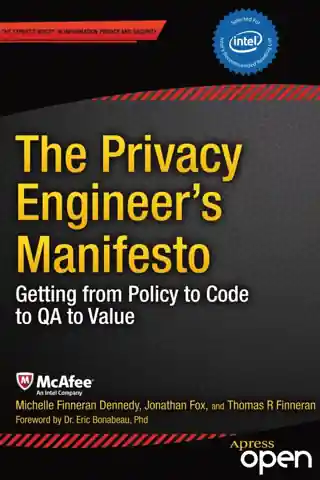
The Privacy Engineer's Manifesto: Getting from Policy to Code to QA to Value is the first book of its kind, offering industry-proven solutions that go beyond mere theory and adding lucid perspectives on the challenges and opportunities raised with the emerging "personal" information economy.
The authors, a uniquely skilled team of longtime industry experts, detail how you can build privacy into products, processes, applications, and systems. The book offers insight on translating the guiding light of OECD Privacy Guidelines, the Fair Information Practice Principles (FIPPs), Generally Accepted Privacy Principles (GAPP) and Privacy by Design (PbD) into concrete concepts that organizations, software/hardware engineers,and system administrators/owners can understand and apply throughout the product or process life cycle—regardless of development methodology—from inception to retirement, including data deletion and destruction.
In addition to providing practical methods to applying privacy engineering methodologies, the authors detail how to prepare and organize an enterprise or organization to support and manage products, process, systems, and applications that require personal information. The authors also address how to think about and assign value to the personal information assets being protected. Finally, the team of experts offers thoughts about the information revolution that has only just begun, and how we can live in a world of sensors and trillions of data points without losing our ethics or value(s)...and even have a little fun.
The Privacy Engineer's Manifesto is designed to serve multiple stakeholders: Anyone who is involved in designing, developing, deploying and reviewing products, processes, applications, and systems that process personal information, including software/hardware engineers, technical program and product managers, support and sales engineers, system integrators, IT professionals, lawyers, and information privacy and security professionals. This book is a must-read for all practitioners in the personal information economy.
Privacy will be an integral part of the next wave in the technology revolution; innovators who emphasize privacy as an integral part of the product life cycle are on the right track.
Conditions of Use
 This book is licensed under a Creative Commons License (CC BY). You can download the ebook The Privacy Engineer's Manifesto for free.
- Title
- The Privacy Engineer's Manifesto
- Subtitle
- Getting from Policy to Code to QA to Value
- Publisher
- Apress
- Author(s)
- Jonathan Fox, Michelle Dennedy, Tom Finneran
- Published
- 2014-01-27
- Edition
- 1
- Format
- eBook (pdf, epub, mobi)
- Pages
- 436
- Language
- English
- ISBN-10
- 1430263555
- ISBN-13
- 9781430263562
- License
- CC BY
- Book Homepage
- Free eBook, Errata, Code, Solutions, etc.
Cover
Title
Copyright
About ApressOpen
Dedication
Contents at a Glance
Contents
About the Authors
About the Technical Reviewers
Acknowledgments
Foreword, with the Zeal of a Convert
Introduction
PART 1: Getting Your Head Around Privacy
    CHAPTER 1: Technology Evolution, People, and Privacy
        The Relationship Between Information Technology Innovation and Privacy
        The Information Age
            The Firewall Stage
            The Net Stage
            The Extranet Stage
            Access Stage
            The Intelligence Stage
        The Dawning of the Personal Information Service Economy
            Data-Centric and Person-Centric Processing
        Conclusion
    CHAPTER 2: Foundational Concepts and Frameworks
        What Is Privacy?
        Privacy Engineering
        Personal Information
        Privacy
            An Operational Definition of Privacy
        Fair Information Processing Principles and the OECD Guidelines
            Collection Limitation Principle
            Data Quality Principle
            Purpose Specification Principle
            Use Limitation Principle
            Security Safeguards Principle
            Openness Principle
            Individual Participation Principle
            Accountability Principle
        Other Governance Standards of which to be aware
        Privacy Is Not Confidentiality and Security Is Not Privacy
            Confidentiality ≠ Privacy
            Security ≠ Privacy
            The Overlaps
            The Disconnects
        Conclusion
    CHAPTER 3: Data and Privacy Governance Concepts
        Data Management: The Management of “Stuff”
        Data Governance
            Benefits of Data Governance
            The Privacy and Data Governance/Stewardship Connection
        Data Privacy Governance Frameworks
        Generally Accepted Privacy Principles (GAPP)
            Impact of Frameworks on the Privacy Engineer
            Frameworks Are Not the Same as Laws
        Privacy by Design
            How Privacy Engineering and Privacy by Design work Together
        Conclusion
PART 2: The Privacy Engineering Process
    CHAPTER 4: Developing Privacy Policies
        Elements of Privacy Engineering Development
        Privacy Policy Development
            What Is a Good Policy?
        Designing a Privacy Policy
            What Should Be Included in a Privacy Policy?
            General-Level Privacy Policy Development
        Enterprise-Specific Privacy Development
        Internal vs. External Policies
        Policies, Present, and Future
        Conclusion
    CHAPTER 5: Developing Privacy Engineering Requirements
        Three Example Scenarios
            Example Scenario 1: The Privacy Component
            Example Scenario 2: A Runner’s App
            Example Scenario 3: Hospitality Vacation Planner
        Privacy Requirements Engineering
        Privacy Requirements Engineering
            Use Cases: A Tool for Requirements Gathering
            Use Cases within Privacy Engineering
            Privacy Requirements Derived from Privacy Frameworks
            Develop Privacy Requirement Use Cases
            The Privacy Engineer’s Use of Use Case Metadata
        Determining Data Requirements
            How Does the Distribution Channel Impact Privacy Engineering Requirements?
        Conclusion
    CHAPTER 6: A Privacy Engineering Lifecycle Methodology
        Enterprise Architecture
            Architectural Views
            Solution Architecture
            Develop Procedures, Processes, and Mechanisms
        Methodology
            System Engineering Lifecycle
            The Use of Models within the Methodology
        Stage 1: Project Initiation and Scoping Workshop
            Project Initiation Defines Project Processes
            Requirements Definition Within the Scoping Workshop
        Stage 2: Develop Use Cases and Class or Data Models
            Develop Business Activity Diagrams
            Defining Business and Privacy Data Classes
            Using the Unified Modeling Language Class Model as a Data Model
            Example: Privacy Component Class Model
            Data Modeling Steps
        Stage 3: Design an Engineered Solution
            User Interface Design
            User Interface Prototype
            Component Design
            Example: Privacy Component
            Privacy Rules
            Develop a System Activity Diagram
            Dynamic Modeling
            Define Service Components and Supporting Metadata
        Stage 4: Complete System Development
        Stages 5 and 6: Quality Assurance and Rollout
            Develop and Execute Test Cases
        Conclusion
    CHAPTER 7: The Privacy Component App
        Privacy Component Context Diagram
            Use Case Requirements to Build a “Privacy Component”
        The Privacy Component Class Model
            Developing the Unified Modeling Language Class Model
        Privacy Component User Interface Requirements
        Design the Privacy Component Solution
            The Privacy Component Solution Architecture
            The Privacy Component Class Structure
            Privacy Component System Activity Diagram
            Privacy Assessment Using the System Activity Diagram
        Develop the Privacy Component Design
        Using the System Development Methodology for the Privacy Component
        Conclusion
    CHAPTER 8: A Runner’s Mobile App
        The Runner’s Mobile App Use Case
        The Runner’s App Class or Data Model
        The Runner’s App User Experience Requirements
        Design the App Structure
        The Runner’s App System Activity Diagram
        Privacy Assessment Using a System Activity Diagram
        Develop the Runner’s App Component Design
        Using the System Development Methodology
        Conclusion
    CHAPTER 9: Vacation Planner Application
        Requirements Definition
            Use Case Metadata for Hospitality Vacation Planner Enterprise Application
            Develop Business Activity Diagrams
        Privacy Component Class and Data Model
        Vacation Planner User Interface Requirements
        Design the Vacation Planner Solution
            The Vacation Planner Solution Architecture
            The Vacation Planner Component Architecture Structure
            Develop System Activity Diagrams
            Dynamic Modeling
            Define Service Components and Supporting Metadata
        Using the System Development Methodology
        Conclusion
    CHAPTER 10: Privacy Engineering and Quality Assurance
        Quality Assurance
        Using Frameworks to Create a Privacy Quality Assurance Checklist
            Purpose
            Notice
            Choice or Consent
            Transfer
            Access, Correction, or Deletion
            Security
            Minimization
            Proportionality
            Retention
            Act Responsibly
        Privacy Concerns During Quality Assurance
            Vector 1: Managing Privacy During Quality Assurance
            Vector 2: Privacy Impact Assessment: A Validation Tool
            Who Is Usually Involved in a PIA?
            What Should a Privacy Impact Assessment Document Contain?
            Vector 3: The Importance and Value of Privacy Impact Assessment to Key Stakeholders
        Resources for Conducting Privacy Impact Assessments
        Conclusion
PART 3: Organizing for the Privacy Information Age
    CHAPTER 11: Engineering Your Organization to Be Privacy Ready
        Privacy Responsibilities in Different Parts of the Organization
        Privacy Awareness and Readiness Assessments
            Define Existing Systems and Processes
            Consider the Context
            Skills Assessment
        Building the Operational Plan for Privacy Awareness and Readiness
        Building a Communication and Training Plan for Privacy Awareness and Readiness
            Communicating
            Internal Communications
            External Communication
            A Word About What Are Usually Important, but Boring Words
            Monitoring and Adapting the Strategy
        Conclusion
    CHAPTER 12: Organizational Design and Alignment
        Organizational Placement and Structure
            Horizontal Privacy Team: Pros
            Horizontal Privacy Teams: Cons
        Common Privacy Engineering Roles
        Challenges of Bringing Privacy Engineering to the Forefront
            Expanding Executive Management Support
            Spreading Awareness and Gaining Cultural Acceptance
            Extending Your Reach with Limited Resources
            Creating Alliances
            Expanding the Scope of Data Governance
            Remaining Productive Amid Competing Priorities and Demands
        Best Practices for Organizational Alignment
            Aligning with Information Technology and Information Security
            Aligning with Data Governance Functions
        Benefits of Data Governance
        Business Benefits of Alignment
            Other Benefits
        Conclusion
PART 4: Where Do We Go from Here?
    CHAPTER 13: Value and Metrics for Data Assets
        Finding Values for Data
        Valuation Models
            Model 1
            Model 2
            Model 3
            Model 4
            Model 5
        Building the Business Case
        Turning Talk into Action
        Conclusion
    CHAPTER 14: A Vision of the Future: The Privacy Engineer’s Manifesto
        Where the Future Doesn’t Need Us
        Even Social Networks (and Their Leaders) Get Cranky When Their Privacy Is Compromised
        Let’s Remember How We Got Here
        Privacy Is Not a One-Size-Fits-All Formula
        Innovation and Privacy
        Societal Pressures and Privacy
        It Still Comes Down to Trust and Value
        A New Building Code for Privacy
        Getting Started
        A Privacy Engineer’s Manifesto
        Conclusion
APPENDIX A: Use-Case Metadata
    Example Use-Case Format
APPENDIX B: Meet the Contributors
Index